 Albuquerque Public Schools
2026 March Wellness Newsletter
Join the Path to Fulfillment step challenge 🚶➡️🌄 Schools can win staff chair massages! How to use willpower & dopamine to muster motivation, and more wellness trends in the news.
Get on the Path to Fulfillment!

Fulfillment is defined as "a feeling of happiness because you are doing what you intended to do in life." It includes a sense of purpose, belonging, and growth. The ability to use our unique talents every day is one of the keys to happiness, harmony, and a foundational element in our quest this year to Build Generational Health. In this 3-week step challenge, we'll journey down that path and explore the characteristics of a life well-lived and how to infuse them into our own lives.
The Path to Fulfillment challenge guides you through themes such as discovering your purpose, balancing work and life, strengthening relationships, finding inner peace, and the art of contentment.
Instructions & Important Items:
1. This is a School Team Chair Massage Challenge! Create or join your school team to be in the running for school chair massages!
-
Teams with the most steps in High School, Middle & K-8, and Elementary categories will win!
-
Eligible school teams for the chair massage challenge must have at least 10 people. Again, in order to be eligible for the school chair massage challenge, your team must have at least 10 people. If your team does not have 10 people, your team can still participate, win awesome raffle prizes, stay motivated, earn wellness incentive points, and have fun!!
-
The platform limits each team to 10 people. SO - If you have MORE than 10 colleagues who want to participate, you can form multiple school teams.
-
For multiple school teams, please include a number (Mark Twain 1, Mark Twain 2, etc.).
2. All other departments, please join or form a team. Raffle prizes will be awarded for department teams!
3. Individuals can form a team and recruit colleagues or choose an already-created team. Please do not select the 'choose a team for me' option.
4. You must sync a fitness tracker, Google Fit, or Apple Health app for steps to be counted. You can not manually enter steps or activities.
5. There are reasonable alternative weekly focus activities starting April 6 through April 26, added to the APS employee wellness calendar for employees with mobility constraints. Invites for these will go out through the APS Employee Wellness Group on Wellness at Work. You can join this group to receive the invites by clicking under the "social" tab on Wellness at Work. Points for your active participation in the alternative challenges will be added to your school or department team. You will be reminded to indicate which school team you are on in the weekly alternative challenge, so it can be counted.
-
A person cannot earn points in both the synced steps challenge and the weekly alternative wellness activities.
-
Those who need the reasonable alternative activity challenges can still join their team on Path to Fulfillment.
-
Upon successful completion of the weekly focus activities, your points will be manually added as ‘steps’ for your team. The step contribution for each weekly focus activity is 2,500.
6. You must be enrolled in Wellness at Work to participate. This is open to all full-time employees. Not on Wellness at Work yet? Click here to join Wellness at Work, then download the Personify Health app.
- If you have any problems logging in to Wellness at Work or Personify Health, email wellness@phs.org.
Stay motivated, foster a sense of belonging, and have fun by forming walking buddy groups at your site! If you have questions, email employee.wellness@aps.edu.
Wellness Wire - The Will for Motivation
I was listening to a couple of podcasts by Dr. Andrew Huberman, “How to increase willpower and tenacity,” and “Increase Motivation and Drive.”
He described motivation as “fundamental to pursuing both short-term and long-term goals, and willpower can be understood as the ability to resist short-term temptations and persist in challenges.”
I’ve said before that if we rely on the feeling of “motivation” to show up for us every day to accomplish goals or change behaviors, we’re setting ourselves up to fail because of our inevitably fluctuating emotions and circumstances.
The truth is that some days we just don’t feel like it…whatever it is…we don’t want to do it or resist it. Daily and seasonal stress, as well as standard fatigue, can weaken our motivation by depleting our mental energy.
Another truth about motivation is that it takes willpower, sacrifice, and - yes - it is a choice. Since we can interpret those words differently, let’s level set definitions for our purposes.
-
Motivation (The "Why"): The internal or external drive, desire, or reason for acting in a particular way. It is often an emotional state that fluctuates and can be fueled by purpose and passion.
-
Willpower (The "How"): The ability to control impulses, resist short-term temptations, and persist through challenges to meet long-term goals. It is often described as "grit" or a "muscle" that can be strengthened through practice but also depleted by heavy use. This concept of willpower ‘depletion’ is somewhat controversial. Some research suggests that if a person believes willpower is a finite or infinite source, it is.
-
Sacrifice: Sacrifice, in the context of willpower and motivation, is the intentional surrender of immediate comfort, pleasure, or valuable, short-term resources (such as time, money, or energy) for the sake of achieving a higher-level, long-term goal or vision. It acts as the "currency" or the "price" that must be paid to translate ambition into tangible success. While willpower is the mental capacity to resist temptation, sacrifice is the physical act of giving up those temptations.
Sometimes we have to let go of a toxic mindset in order to embrace a more positive one - that’s a sacrifice.
We may have to unravel an addictive, layered behavior to build another healthier one - that’s a sacrifice.
We may have to swap unhealthy relationships and environments for more supportive ones- that’s a sacrifice.
If we are truly determined to motivate and live a healthier, well life, we have to give up or resist some 'thing' or behavior, in order to get to the other. And it won’t happen with motivation alone.
This is the most fundamental point: We cannot wait to ‘feel’ motivated before taking action. We get stuck in lifestyle inertia and the messy middle ground of procrastination.
We risk languishing in the same mental, emotional, physical, and spiritual state a year from now that we are in now.
*Take a minute to consider what that looks like for you. Different year. Same circumstances (or worse). Do you really want that?
We may expect that we need motivation at the onset in order to move forward when, in fact, motivation comes after we’ve initiated the action- to persist or resist- in the form of dopamine. And it’s a circular loop as Dr. Huberman points out, “the connection between dopamine and motivation goes both ways: just as dopamine increases subjective feelings of motivation and willpower, actively pursuing a goal in turn increases dopamine levels.”
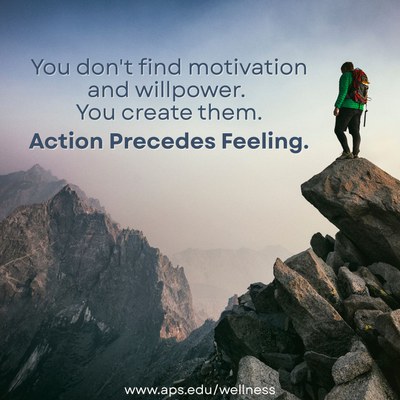
Action precedes feeling. In fact, retired United States Navy SEAL and ultramarathon runner David Goggins speaks to the evidence that motivation comes after and as a result of taking action.
The cool thing is that we can use dopamine and the concept of willpower to increase motivation with thrifting and iterative practices - as we have been doing since the beginning of our journey to Build Generational Health.
I encourage you to read below. Try one or two methods to increase motivation through simple, iterative willpower dopamine hacks.
Thrift & Iterate Using Huberman’s Motivation Framework:
-
Foundation First: Before attempting to build immense willpower, ensure your foundational biology is sound by prioritizing high-quality sleep and managing stress.
-
The Brain's Willpower Center: The anterior mid-cingulate cortex (aMCC) in the brain is directly correlated with, and physically expands through, the practice of overcoming, and it is a key hub for willpower and tenacity.
-
The habenula receives input from parts of the brain, such as the cingulate cortex. This helps it guide decisions based on negative, social, or emotional experiences.
-
The habenula and aMCC work together to process negative outcomes and help change behavior. The aMCC keeps track of past outcomes, while the habenula detects negative outcomes. Together, they slow down and inhibit dopamine neurons, which lowers reward-seeking and encourages avoidance.
-
The habenula sends an "anti-reward" signal when something negative happens right away. The aMCC, on the other hand, supports long-term thinking and tracks what needs to change in behavior.
- The "Micro-Sucks" Protocol: Regularly doing things you dislike or don't want to do—but are safe—is the fastest way to increase willpower because it strengthens the aMCC. Examples include adding an extra set to a workout, taking a cold shower when you don't want to, or holding a plank longer.
-
Any small yet manageable action that creates short-term discomfort will strengthen the aMCC and trigger a positive dopamine response, corresponding to a shift in the habenula and our sense of success, or self-efficacy.
-
Voluntary Uncomfort: To build this, the act must feel like a strain. If you enjoy the challenge (e.g., a hard run you enjoy), it does not boost willpower as effectively as doing something you genuinely dislike.
-
Mindset & Belief: When we view willpower as an unlimited resource rather than a finite one, it allows us to exert more effort without fatigue.
-
Dopamine Management: Understand that dopamine is for seeking and desire, not just reward. To maintain high motivation, avoid constant dopamine spikes (e.g., from sugar, social media, or constant rewards), which lead to crashes.
-
Intermittent Reinforcement: Instead of rewarding yourself every time you achieve a goal, reward yourself randomly (e.g., every 3rd or 5th time) to keep dopamine levels high.
-
Visual Focus: Narrowing your physical gaze on a specific point for 30-60 seconds can increase concentration and trigger a state of readiness, enhancing motivation for cognitive tasks.
-
Negative Visualization: While positive visualization is good for getting started, focusing on the negative consequences of failing to achieve a goal is more effective for sustaining long-term action. (*The reason for the question above.)
-
Cold Exposure: Using cold showers or ice baths to create a significant, safe "adrenaline and dopamine" surge.
-
Morning Sunlight: Viewing sunlight within 30 minutes of waking (when seasons allow) to set the circadian clock and boost baseline dopamine.
-
Phone Usage: Avoid checking your phone for the first 80-90% of the day or at least for the first hour to prevent early dopamine depletion.
So far, we've laid the foundation for our year to Build Generational Health and pivot from poverty to prosperity through health, harmony, hope, and home, with these topics. Click to catch up if you missed it!
- Classifications of poverty
- The Habenula - Our motivation kill-switch, failure detector, craving controller, depression driver, and addiction hub.
- Habits vs Behaviors
- Harmony for a strong foundation.
- Raise The Bar - Standard Fatigue: The standards we set are the standards we get. The crux of our generational decline in physical, mental, emotional, and spiritual well-being.
Life on Mindfulness
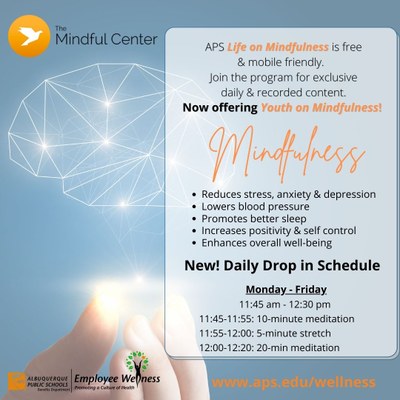
If there is one practice that is scientifically proven to help regulate our stress, shift our thinking from poverty to prosperity, and reframe setbacks as opportunities for positive behavior change, it's mindfulness. Meditation also directly impacts neuroplasticity for behavior modification and regulates our habenula to keep our neurochemical reward system running smoothly.
This is a free, flexible program for all employees that offers daily drop-in meditations, new weekly and monthly content, and featured meditations. See the link below to enroll in the Life on Mindflness program for all content and email reminders. Everything is recorded for on-demand access. Links for daily drop-ins are available in the Employee Wellness Google Calendar. This site is mobile-optimized, so you can access a wide variety of recorded meditations anytime, anywhere. *The Life on Mindfulness program is open to all APS employees.
The mindful center has a new page and a new daily schedule. This allows you the opportunity to flex meditation times and enjoy a stretch break.
New login information for Life on Mindfulness
- If you have not enrolled in the Life on Mindfulness program, enroll here.
- If you are enrolled, click this link: https://themindfulcenter.com/login/ and go to the top right, orange "member login" button.
- Enter the email that you registered with. You can click the 'remember me' button for quicker access moving forward.
- Enter the new password: LOMPREMIUM
The site is 'mobile-ready,' meaning you can view and listen to meditations anytime, anywhere on your phone. Each week, there are new meditations, recorded past meditations, featured workshops, and meditations
NEW! Youth on Mindfulness Page on the Life on Mindfulness Platform
Bring mindfulness to your students and add another Goal 4 skillset to your classroom! The Mindful Center has added a Youth on Mindfulness page. This is free for APS employees, and educators can use any of the meditations in the classroom. These mediations are suitable for students aged 10-18.
To get to the Youth Meditations:
- Click on your Life on Mindfulness account.
- Go to the "Member Login" top right orange button and log in.
- Click the top left menu "Life on Mindfulness".
- Scroll down to the "Meditate Now" button and click.
- Scroll through the audio options. All 18 audio meditations are age-appropriate.
- Note: Additional youth content is regularly updated under the "Youth on Mindfulness" tab.
APS Offers Wellness Coaching for All Employees
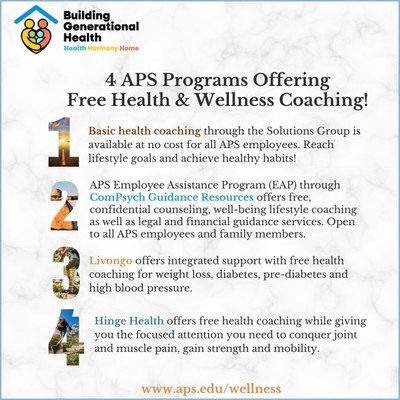
If you're stuck in this motivation-less middle ground and having a hard time with decisions to bolster well-being, wellness coaching is the perfect avenue to help you redirect, reflect, and reset! Try one of these APS programs that offer personalized health coaching and enroll today.
- Health Coaching: This service is offered through our Solutions Group wellness partner. Get help shifting lifestyle habits, managing a chronic illness, weight loss to improve health, or simply feel better. APS offers free Health Coaching for all employees. *Open to all APS employees.
- APS EAP free, confidential counseling and lifestyle/well-being coaching services through ComPsych Guidance Resources . *This is open to all APS employees and immediate family members.
- Livongo/Teladoc is an integrated program for diabetes, high blood pressure, pre-diabetes, and weight loss. Livongo offers wrap-around, integrated mental health services and health coaching. *This program is open to all eligible employees and dependents covered under APS Benefits. Getting started is easy!
- Text “GO APS” to 85240 to learn more and join
- Join by visiting https://www.livongo.com/aps
- Call 800-945-4355 and use the registration code: APS
- Hinge Health: Get the relief you need to feel and function better with this virtual physical therapy program by Hinge Health. Hinge Health gives you the tools you need to conquer joint and muscle pain, including back, neck, knee, and shoulder pain, recover from injuries, prepare for surgery, and stay healthy and pain-free. Hinge Health also offers a one-of-a-kind, industry-leading women's pelvic floor program.
Click here and learn more to register. Begin your journey today with a team of physical therapists and health coaches! *Hinge Health is available at no cost to employees covered under the APS Benefits plans and eligible dependents.
ComPsych Counseling & Financial Guidance Resources

If financial security, taxes, budgeting, or getting a handle on credit card debt is on your New Year's goal list, ComPsych offers highly trained financial experts. Call the toll-free number, and you'll be connected to a consultant who will discuss your specific situation and schedule a phone appointment with one of their financial experts. This service is free for all APS employees and family members.
Consultation services include:
- Credit card and debt management
- Budgeting, retirement, and estate planning
- Mortgages, loans, and refinancing
- Tax and real estate questions
- Financing for college
To access ComPsych GuidanceResource® services:
- Call the toll-free number at (800) 497-9088. You'll be connected with a highly trained professional who can guide you to the appropriate services.
- Register with GuidanceResources® online at www.guidanceresources.comExternal link and enter the APS company WebID: APSEAP
- Choose the role group that most closely aligns with your position at APS. For family members, choose the APS employee role group. Your designation (ie, spouse, child) will be captured later.
- Download the GuidanceNow™ app for fast and easy access to all your ComPsych resources.
Financial Wellness with Nusenda
We know that financial burden—debt, cost of living, unexpected expenses—is the leading cause of stress for adults right now. Stress affects our heart health and quality of life. Left unmanaged, stress increases and perpetuates the cycle of physical, emotional and mental illness. Nusenda Credit Union has been the Albuquerque Public Schools Federal Credit Union since 1936 and offers comprehensive financial services to APS employees and their family members.
- When the unexpected happens, Nusenda offers Personal Assistance Loans (PAL), as well as other personal loans, to give you financial breathing room. Nusenda also offers other personal loans, including teacher loans, which are available to all APS employees. Visit your nearest branch, call 505-889-7755, or visit nusenda.org to learn more.
- The APS Employee Wellness Banzai Site offers financial literacy courses and interactive simulations that engage users as they learn about finances and how to build credit, reduce debt, and/or save for life expenses like buying a home or car, starting a family, and planning retirement.
- Take a look at this Nusenda benefits flyer and reach out to Nusenda for more information.
Wellness Trends In The News
|