 Albuquerque Public Schools
💐April 2026 Employee Wellness Newsletter
Let's play pickleball! Check out the new APS employee free play at The Picklr! The price we really pay with the "attention economy", more paths to wellness through APS health coaching, Life on Mindfulness, & more wellness trends in the news.
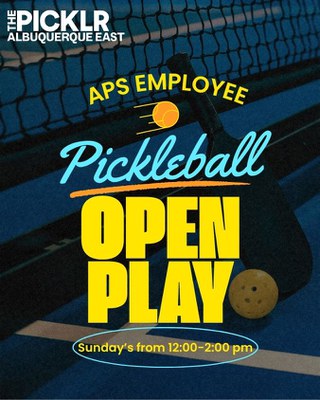
New! APS Employee Free Play at The Picklr
Pickleball—a sport where you can have a "mid-court crisis," volley Llama's, get pickled, dinked, cookied, flap-jacked, and falafeled with or without even going "into the kitchen." And now APS Employees and their families can play at the new Picklr East pickleball facility for FREE on Sundays!
Yep. APS Employee Wellness and The Picklr East have partnered to bring you APS Employee Sunday -Funday. Courts are reserved for APS employees every Sunday from 12:00-2:00 p.m.
There's no catch except please don't plan on hosting a family reunion. Bring your APS employee badge to show the fine folks at The Picklr's front desk. This is a great opportunity to get the family out for playtime or connect with other APS friends and colleagues.
The Pickler East is located at 45 Hotel Circle NE off Lomas and Eubank Blvd. Paddles and balls are included; however, you can certainly bring your own.
If you have any questions, please email APS Employee Wellness at employee.wellness@aps.edu.
Can I have Your Attention - PLEASE?!
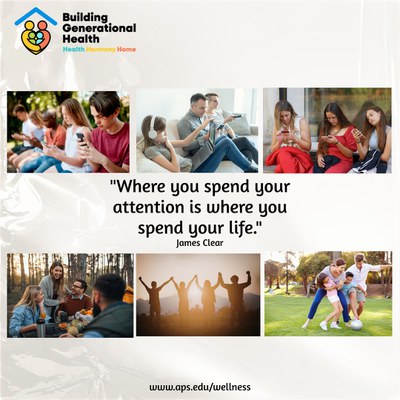
Studies show that we check our phones roughly 186 times a day. We get pinged, buzzed, or somehow app ‘notified’ 46 to 146 times daily, with some studies showing youth push notification rates up to 200 a day.
We’re getting pushed, shoved, and nudged constantly! Platforms and, more importantly, businesses are vying for our attention. For the most part, they’re getting it in abundance.
The result? Mental health has cratered with a rise in depression and anxiety. We've experienced a significant cognitive decline in memory and attention span. Increased screen time leads to "social atrophy," reducing a person's ability to interpret nonverbal cues and navigate complex interpersonal, emotional, or in-person interactions. And, tragically, the US has experienced an epic surge in loneliness. Proving that digital interaction does not even remotely equate to genuine, in-person connection.
An article from TrueMed nails it with this:
"Not your house. Not your car. Not your retirement account. Your attention. And right now, it's being sold to the highest bidder.
Companies spend serious dollars engineering one thing: keeping your eyes on a screen as long as possible. Every notification. Every autoplay video. Every algorithmic feed is designed to exploit our neurochemistry. Here's what nobody talks about: the associated health bill."
That attention - our focus and valuable neurochemistry being influenced and exploited - is a commodity.
It’s called the “attention economy,” and it's big business.
In an article from Georgetown Law, attention economy is described as "a system in which human attention, a finite and valuable resource, is treated as a commodity: captured, analyzed, and traded for profit by digital platforms and advertisers. In this model, attention becomes the currency, and platforms like Facebook, YouTube, Instagram, and TikTok act as brokers."
What this leads to is an attention deficit in other areas of our lives.
Because do you know who else is vying for our attention?
- Our kids'
- Spouses & partners
- Our families & community
- Our mental, emotional, spiritual, and physical well-being is PLEADING for attention.
Buried under the digital drama designed to exploit all our weaknesses are the most valuable commodities money cannot buy. Those areas of family, connection, purpose, motivation, and well-being are slowly eroding away - going broke - because our attention is purposely being led elsewhere. The attention economy is stealing our time and our health.
Skyrocketing chronic illness, fractured relationships, and plummeting mental health are the real costs associated with the "attention economy."
What we pay attention to, focus on, and prioritize is the most impactful driver of our mental, spiritual, and physical well-being.
How The Attention Economy Affects our Brain & Wellbeing
My brain, along with various Google AI resources, including this Fulcra article, identifies how our escalating entrapment on social media and the internet downgrades our brain function, amplifies emotionally charged, polarizing content, drives angry discourse, and downgrades well-being.
- Reduced Capacity for Focus (Cognitive Impairment): The constant, rapid switching between tasks (multitasking) prevents the brain from engaging in deep, sustained focus. This causes "fragmented attention," reducing our ability to concentrate on complex tasks and leading to decreased memory and learning capacity.
- Dopamine Loops and Addiction: Social media and apps are designed to trigger the release of dopamine—a neurotransmitter linked to pleasure, motivation, addiction, cravings, and depression—every time we receive a "like," comment, or notification. This creates a compulsive, addictive loop similar to gambling, encouraging excessive time on screens and difficulty disengaging.
- Chronic Stress and Exhaustion: The incessant notifications and need for immediate engagement keep the nervous system in a constant state of low-level arousal. This leads to cognitive exhaustion, a reduction in working memory, and increased anxiety.
- Reduced Emotional and Cognitive Regulation: Heavy digital consumption is associated with decreased stimulation of the prefrontal cortex—the area responsible for regulating emotions and executive function. This can impair decision-making and decrease emotional regulation, making us more susceptible to irrational, angry outbursts, social comparison, anxiety, and depression.
- "Brain Rot" and Cognitive Decline: Long-term exposure to fast-paced digital stimulation has been linked to potential long-term structural changes, including difficulties with impulse control and a decreased ability to process emotional cues.
All of the above loop directly into standard fatigue, habits versus behaviors, and motivation. When we are cognitively gassed and over-stimulated, our will for motivation to do anything else and our ability to make healthier decisions - tanks. The result of this intentional attention-grabbing is behaviors that steal our sleep, drive anxiety, frustration, angry discourse, disharmony, and lead to fractured relationships and depression.
The good news is that we can reclaim and redirect our attention to what matters! It is OURS after all - and we have the ultimate say in what we do with it.
Optimize & Downsize Your Digital Use & Environment
Here are the thrifting, iterative techniques that will reduce cognitive load and increase willpower by expanding our mid-cingulate cortex, which activates the habenula and boosts motivation by regulating (rather than oversaturating) dopamine. Give at least one of these a try, then add another. Don't worry about FOMO - The only thing you'll be missing out on is more stress:)
- Notification Hygiene: Turn off all non-human notifications. Allow alerts only from people (calls/texts) rather than machines (likes, news, or promotional alerts).
- Grayscale Mode: Set your phone screen to black-and-white. This makes the interface less stimulating and reduces the dopamine response to vibrant icons and images.
- Purge and Relocate: Delete apps that don't add daily value. For essential but distracting apps (like social media), move them off your home screen into folders on the second or third page to break the muscle memory of opening them. I suggest removing social media apps from your phone entirely. Give yourself a short, pre-determined amount of scheduled time to catch up on social media one day a week, then let it go.
- Charging Outside the Bedroom: Use a physical alarm clock and charge your device in another room to prevent the "first and last hour" screen habit. Stop taking your phone to bed with you!
Throughout the month of April, let's align our time, attention, and intentions to find greater meaning, connect with our community and families, and experience inner peace and harmony. This is the essence of the Path to Fulfillment and our continued quest to build generational health through harmony, hope, and home.
Health Coaching to Help You Along the Path to Well-being
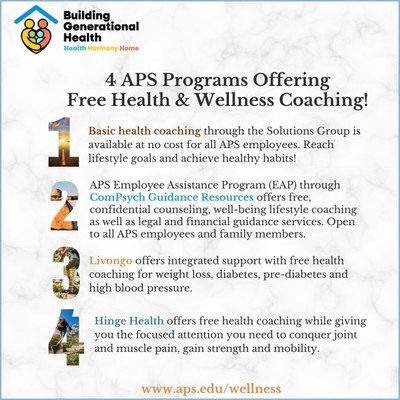
Sometimes, the path forward may be paved with good intentions, but it's rutted with insecurity stemming from past perceived failures and motivational setbacks. But you don't have to travel this road alone! If you're struggling, wellness coaching is the perfect avenue to help you navigate emotional and physical health issues and get back on the path to well-being. Try one of these APS programs that offer personalized health coaching and enroll today.
- Health Coaching: This service is offered through our Solutions Group wellness partner. Get help shifting lifestyle habits, managing a chronic illness, weight loss to improve health, or simply feel better. APS offers free Health Coaching for all employees. *Open to all APS employees.
- APS EAP free, confidential counseling and lifestyle/well-being coaching services through ComPsych Guidance Resources . *This is open to all APS employees and immediate family members.
- Livongo/Teladoc is an integrated program for diabetes, high blood pressure, pre-diabetes, and weight loss. Livongo offers wrap-around, integrated mental health services and health coaching. *This program is open to all eligible employees and dependents covered under APS Benefits. Getting started is easy!
- Text “GO APS” to 85240 to learn more and join
- Join by visiting https://www.livongo.com/aps
- Call 800-945-4355 and use the registration code: APS
- Hinge Health: Get the relief you need to feel and function better with this virtual physical therapy program by Hinge Health. Hinge Health gives you the tools you need to conquer joint and muscle pain, including back, neck, knee, and shoulder pain, recover from injuries, prepare for surgery, and stay healthy and pain-free. Hinge Health also offers a one-of-a-kind, industry-leading women's pelvic floor program.
Click here and learn more to register. Begin your journey today with a team of physical therapists and health coaches! *Hinge Health is available at no cost to employees covered under the APS Benefits plans and eligible dependents.
Journey Toward Fulfillment With Mindfulness
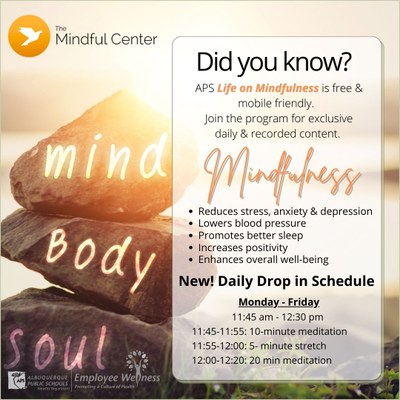
If there is one practice that is scientifically proven to help regulate our stress, shift our thinking from poverty to prosperity, and reframe setbacks as opportunities for positive behavior change, it's mindfulness. Meditation also directly impacts neuroplasticity for behavior modification and regulates our habenula to keep our neurochemical reward system running smoothly.
This is a free, flexible program for all employees that offers daily drop-in meditations, new weekly and monthly content, and featured meditations. See the link below to enroll in the Life on Mindfulness program for all content and email reminders. Everything is recorded for on-demand access. Links for daily drop-ins are available in the Employee Wellness Google Calendar. This site is mobile-optimized, so you can access a wide variety of recorded meditations anytime, anywhere. *The Life on Mindfulness program is open to all APS employees.
The mindful center has a new page and a new daily schedule. This allows you the opportunity to flex meditation times and enjoy a stretch break.
New login information for Life on Mindfulness
- If you have not enrolled in the Life on Mindfulness program, enroll here.
- If you are enrolled, click this link: https://themindfulcenter.com/login and go to the top right, orange "member login" button.
- Enter the email that you registered with. You can click the 'remember me' button for quicker access moving forward.
- Enter the new password: LOMPREMIUM
The site is 'mobile-ready,' meaning you can view and listen to meditations anytime, anywhere on your phone. Each week, there are new meditations, recorded past meditations, featured workshops, and meditations
Youth on Mindfulness Page on the Life on Mindfulness Platform
Bring mindfulness to your students and add another Goal 4 skillset to your classroom! The Mindful Center has added a Youth on Mindfulness page. This is free for APS employees, and educators can use any of the meditations in the classroom. These mediations are suitable for students aged 10-18.
To get to the Youth Meditations:
- Click on your Life on Mindfulness account.
- Go to the "Member Login" top right orange button and log in.
- Click the top left menu "Life on Mindfulness".
- Scroll down to the "Meditate Now" button and click.
- Scroll through the audio options. All 18 audio meditations are age-appropriate.
- Note: Additional youth content is regularly updated under the "Youth on Mindfulness" tab.
Wellness Trends in The News
 |
Recipe of the Month: Lemon Herb Chicken & Quinoa Spring Power Bowls
This Lemon Herb Chicken & Quinoa Spring Power Bowl is designed for sustained energy and convenience; two priorities for anyone balancing fitness, work, and nutrition. Built around low-glycemic carbohydrates like quinoa and fiber-rich vegetables, this recipe helps stabilize blood sugar levels and prevent midday crashes. Lean grilled chicken provides high-quality protein to support muscle repair…read more » |
 |
Cardio “Snacks”: The Smart Way to Stay Active Indoors
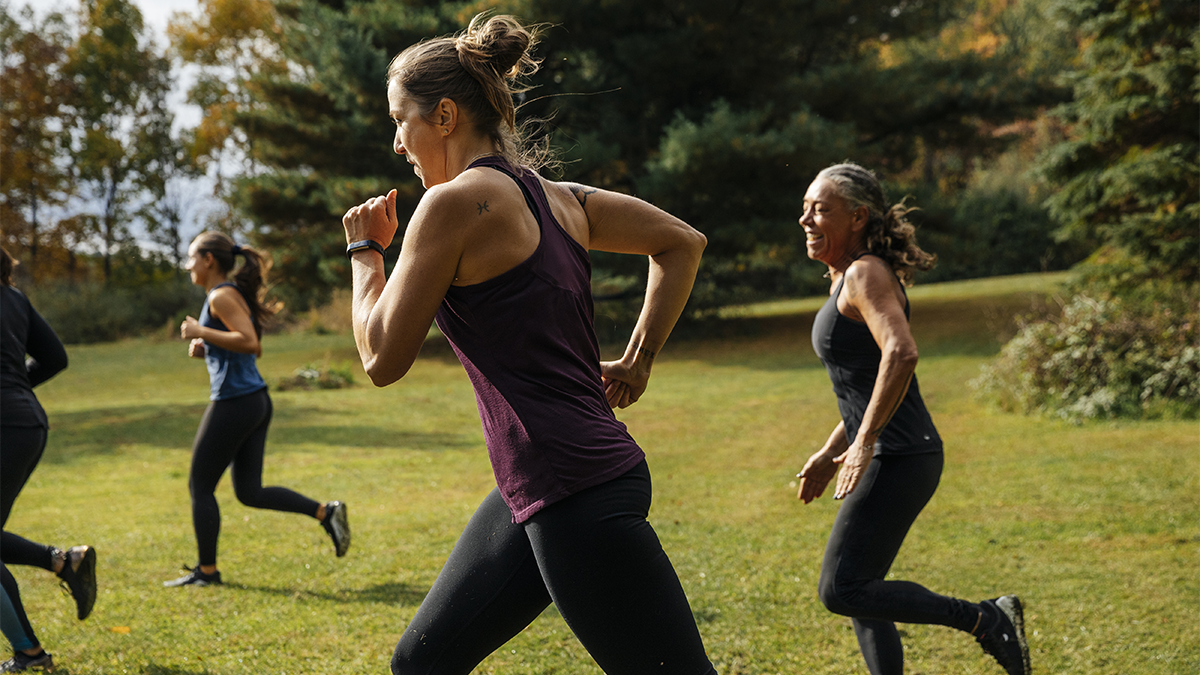
When outdoor conditions aren’t ideal—whether due to allergens, weather, or time constraints—many fitness enthusiasts are turning to “cardio snacks.” These are short, 5–10 minute bouts of activity performed throughout the day, rather than one long session. This approach not only makes cardio more manageable, but research suggests it can still deliver meaningful cardiovascular and metabolic benefits…read more » |
 |
Cold Exposure “Lite” using Small Doses for Big Recovery Benefits
Cold therapy has long been associated with extreme ice baths, but a more accessible trend is gaining traction: “cold exposure lite.” Instead of committing to full-body immersion, fitness enthusiasts are using brief face dunks, finishing showers with 15–30 seconds of cold water, or applying cold packs post-workout. These smaller doses still stimulate the vagus nerve...read more » |
 |
Minimal Equipment, Maximum Results: The Rise of Simplified Strength Training
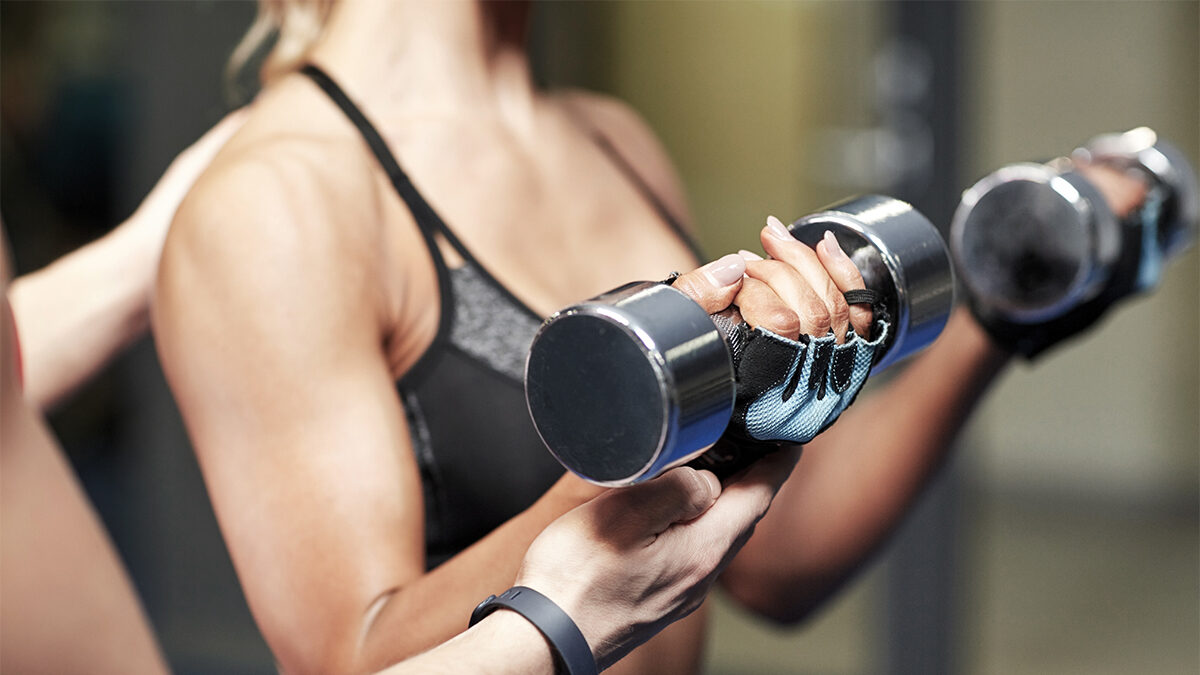
Strength training no longer requires a fully equipped gym. One of the biggest trends right now is minimal equipment training—programs built around dumbbells, kettlebells, and bodyweight exercises that deliver serious results without complexity. This shift is driven by accessibility and adherence; when workouts are simpler and more convenient, people are far more likely to stay…read more » |
 |
Smarter Carbs: The Shift to Low-Glycemic, High-Fiber Choices
Carbohydrates are no longer the enemy—but the type of carbs you choose matters more than ever. A growing nutrition trend is the shift toward low-glycemic, high-fiber carbohydrate sources like lentils, beans, oats, and whole grains. These foods digest more slowly, leading to a gradual rise in blood sugar rather than sharp spikes and crashes.read more » |