 Albuquerque Public Schools
New Literacy Assessment Complicates Goal Tracking
Initial testing shows mixed results, but district leaders optimistic about the tool's potential for skill-based progress monitoring.
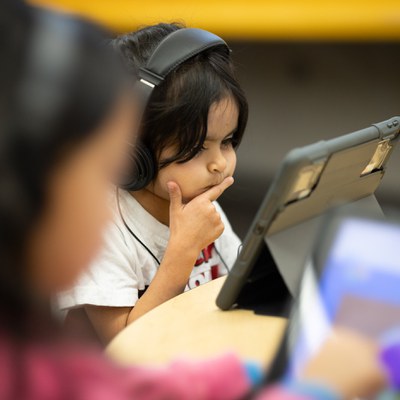
A corporate merger forced New Mexico to switch from Istation to Amira for assessing early elementary reading, and that’s posing a bit of a challenge as Albuquerque Public Schools tries to determine whether it’s on track in meeting its literacy goal for the year.
APS administrators described the new assessment as a potential “game changer” because it allows educators to drill down on the specific skills that individual students and groups are having difficulty with. But they also stressed that because it’s a new test, the district will need time to establish baseline data.
“Given that this is the first time Amira ISIP has been administered to all APS students in grades K-3, it will take at least one full school year for us to know how this new assessment aligns with the New Mexico Measures of Student Success and Achievement,” the progress monitoring team said in its report to the APS Board of Education.
In 2023, the board adopted four five-year goals focused on literacy, math, college and career readiness, and skills, habits and mindsets for life success. The first two goals – focused on literacy and math – were geared toward improving academic outcomes for African American students and those identified in the Martinez-Yazzie court decision: Native American students, English language learners, students with disabilities and those who are economically disadvantaged.
The goal calls for a 10 percentage point increase in grade-level proficiency on the state English Language Arts summative assessment for third-grade students in these groups who have historically struggled academically. Specifically, it calls for an increase from 27.3% in May 2023 to 37.3% in May 2028.
To keep on track, the APS leadership team established interim goals focused on internal Istation testing, and the district regularly reports to the board on its progress toward achieving those interim goals.
On Oct. 15, Deputy Superintendent Antonio Gonzales, Chief Academic Officer Sheri Jett, Assistant Superintendent Anna Chavez and Executive Director of Accountability and Reporting Chris West presented progress monitoring reports for Interim Goals 1.1 and 1.2.
Results were mixed.
Interim Goal 1.1 calls for the percentage of first-grade students identified in the Yazzie-Martinez decision plus African American students who demonstrate grade level proficiency or above in reading to increase from 17% in May 2023 to 23% in May 2026. The initial Amira assessment showed that 18.3% of these targeted first-grade students were proficient at the beginning of the current school year, 4.7 percentage points below where the goal states they should be at the end of this school year.
Interim Goal 1.2 calls for the percentage of second-grade students in these same targeted groups who demonstrate grade level proficiency or above in reading to increase from 18.3% in May 2023 to 24.3% in May 2026. The Amira assessment shows APS second-graders have already exceeded the end of year target.
“As a group, 26.4% of students identified in the Yazzie-Martinez Decision plus African American students scored proficient or above on the beginning-of-year Amira ISIP reading assessment,” the team wrote in its report. “This is our baseline data point to improve upon between now and the end of the school year.”
Despite the difficulty that comes from the switch in internal assessments, APS officials said they’re optimistic that the new test will be beneficial in the long run because it provides the ability to progress monitor student group performance in early literacy skills in a way that’s consistent with the Science of Reading.
Specifically, Amira provides the ability to see how individual students and student groups are doing on specific skills, including decoding, phonological awareness, high frequency words, background knowledge, vocabulary, structures and reasoning.
“We're very hopeful that it'll be a game changer in terms of what's available to us, to check some of our assumptions about what we think that the students know and can do,” West said.