 Albuquerque Public Schools
Growing a Better School Food System
Posted
September 30, 2026,
8:30 AM.
Updated
September 29, 2026,
2:02 PM.
New Mexico ranks No. 2 in the nation for school meals, with 100% Community Eligibility Provision adoption and a 75.8% local-food rate.
When students sit down for breakfast or lunch at Albuquerque Public Schools, there is more happening behind the meal than what appears on the tray.
Across New Mexico, school meal programs are making it easier for students to access nutritious food while strengthening connections to local agriculture and communities. That work is reflected in the 2026 State of School Lunch Report from ProCare Therapy, which ranks New Mexico No. 2 in the nation for school meals.
One number stands out: 100% of eligible New Mexico schools are participating in the Community Eligibility Provision, the highest CEP adoption rate in the country.
CEP allows eligible schools to provide breakfast and lunch at no charge to all students, removing the need for families to complete meal applications or students to navigate different payment or eligibility categories in the cafeteria. New Mexico also has a statewide Healthy School Meals for All policy.
The state’s school meal system also has a strong connection to local food. According to the report, 75.8% of schools represented by responding school food authorities serve locally sourced foods. New Mexico also has approximately 68.8 breakfast participants for every 100 lunch participants, the third-highest ratio nationally, and a school lunch reach of approximately 62.3 participants per 100 school-age residents.
For APS, those numbers connect directly to work already underway to rethink what school meals can look like.
From Scratch Cooking to Local Food
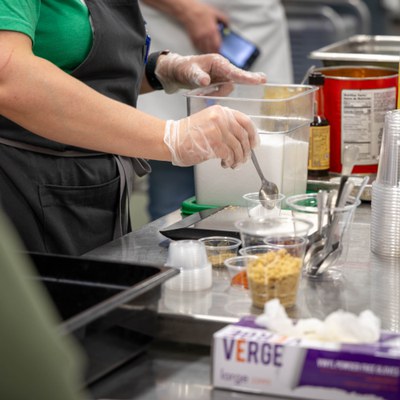
APS Food and Nutrition Services is continuing to expand its scratch-cooking efforts, preparing more food from basic ingredients rather than relying primarily on highly processed, pre-prepared products.
That approach creates opportunities to bring more fresh ingredients into school meals while also making room for foods that reflect the cultures and traditions represented throughout Albuquerque.
The district's culturally relevant and locally sourced food initiative is part of that work. By incorporating locally grown ingredients and meals inspired by the communities APS serves, school food can become more than something students eat during the school day. It can become a connection to home, culture, agriculture and the place students call home.
APS already prepares approximately half of its meal components from scratch, while continuing to expand opportunities to bring locally sourced foods into cafeterias.
The result is a system that connects what happens in the kitchen to what happens in classrooms and communities.
And now, that connection extends beyond the cafeteria.
What Happens After the Meal Matters, Too
APS recently launched a food waste diversion initiative designed to keep organic waste out of landfills and put it to work elsewhere in the community. In just three weeks, the program has already diverted nearly 1,700 pounds of organic waste from the APS Central Kitchen.
The process creates a full-circle loop:
- Prep scraps from the APS Central Kitchen are collected weekly.
- The scraps are processed at Soilutions’ South Valley facility into nutrient-rich compost.
- The compost returns to local school and community gardens, where students can learn, grow and connect with the environment.
The initiative also provides a tangible way for students to see environmental stewardship in action. Diverting organic waste helps reduce the amount of material sent to landfills while supporting healthier soil and creating opportunities for hands-on learning in school and community gardens.
It is another example of how the work happening in APS Food and Nutrition Services reaches beyond the cafeteria.
A Meal Is More Than What's on the Tray
The recognition for New Mexico's school meal system reflects several pieces working together: access, participation, local food and statewide policies that reduce barriers to meals.
That broader vision is taking shape through everyday work at APS.
It looks like making meals from scratch. It looks like sourcing food locally when possible. It looks like serving foods that reflect the cultures and communities of APS students. It looks like making sure students have access to meals without unnecessary barriers.
And now, it also looks like collecting the scraps left behind and turning them into something that can grow the next generation of food.
From local ingredients to scratch cooking, from the cafeteria to the garden, the goal is a school food system that supports students today while building stronger connections to the community and environment around them.
New Mexico's 100% CEP adoption and 75.8% local-food rate show what is possible when access to school meals and connections to local food are treated as essential parts of supporting students.
At APS, the work continues to bring those ideas full circle.